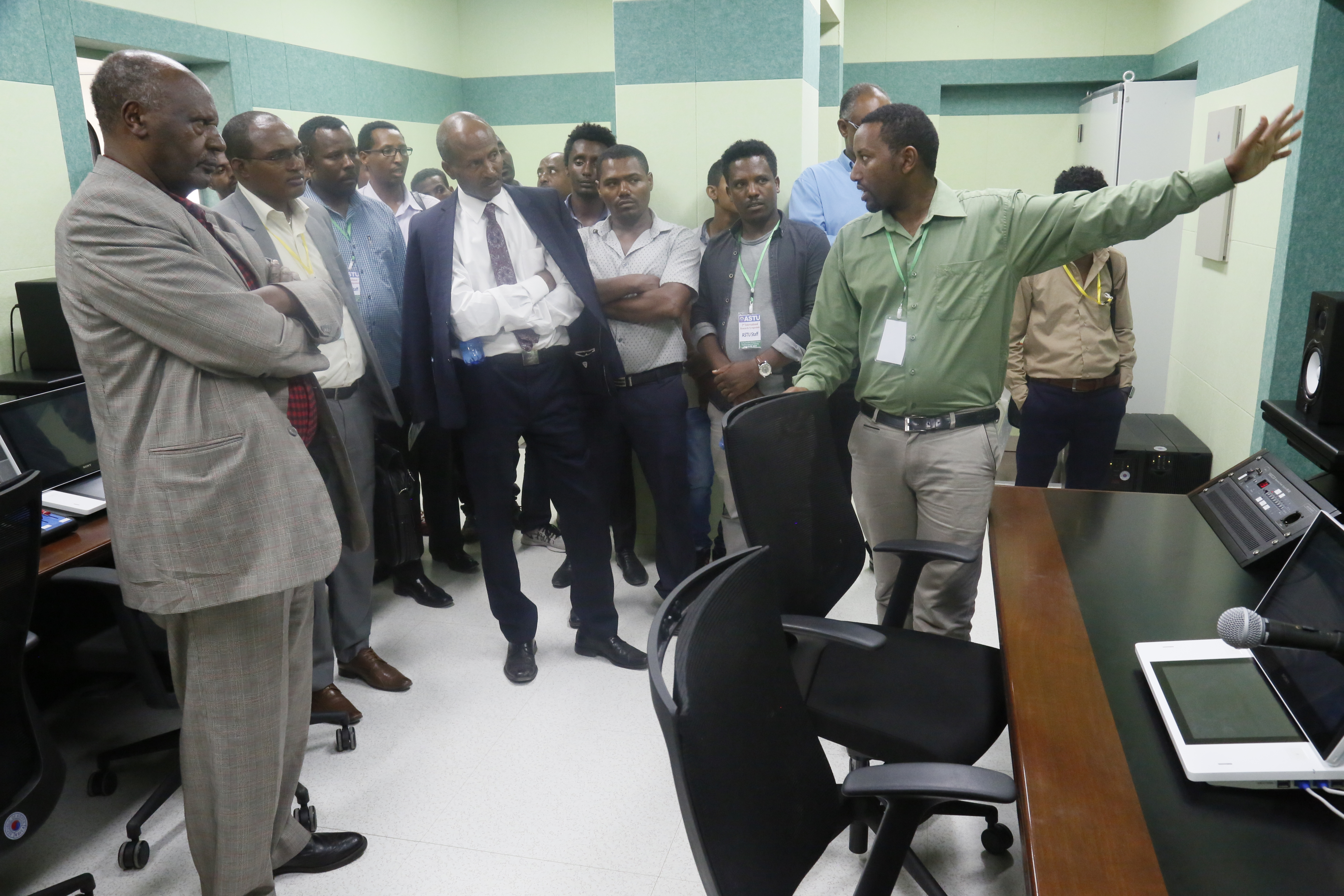
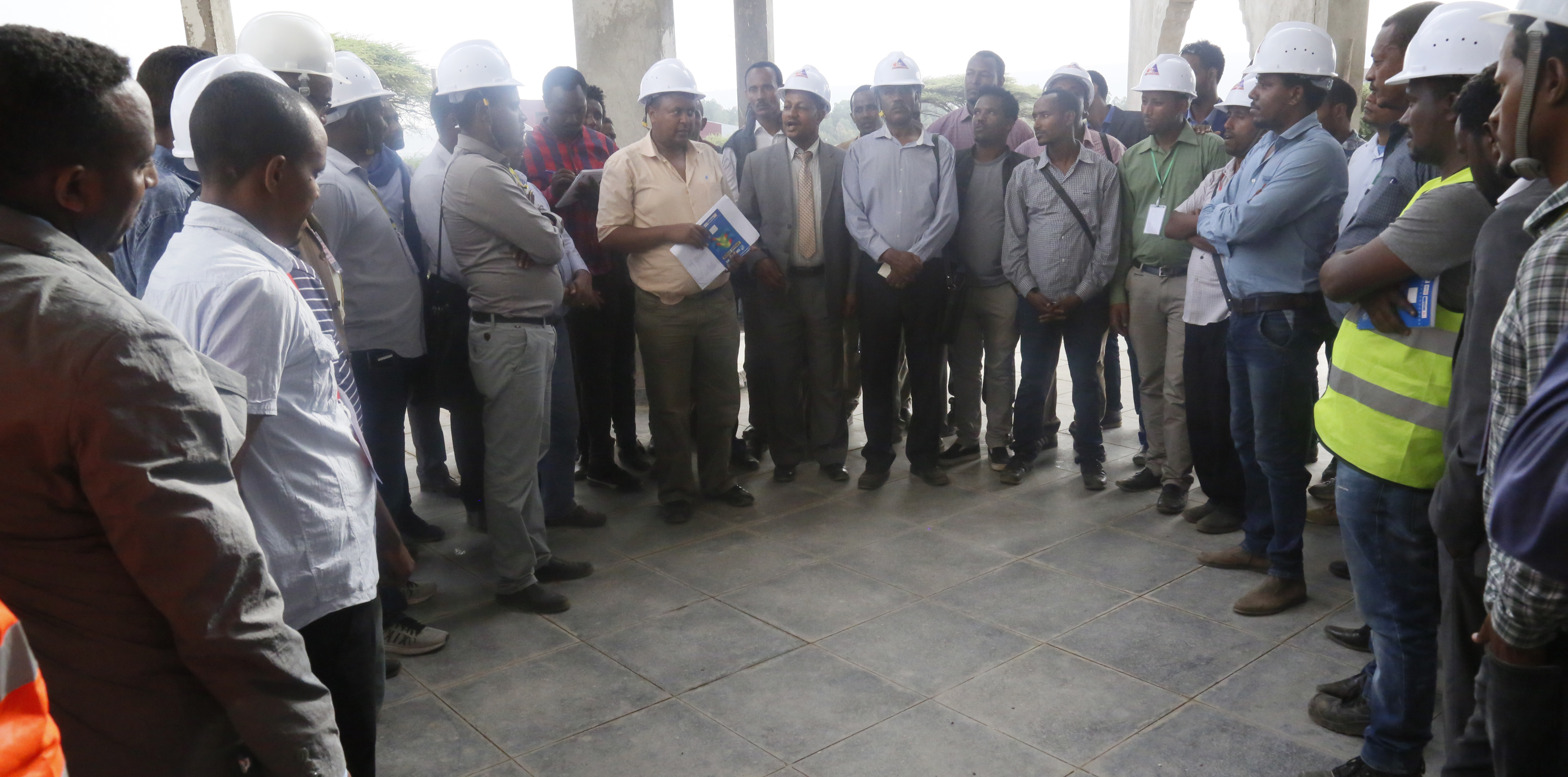
Adama Science and Technology University envisions attaining a status of Model Science and Technology University in Ethiopia and becoming an International Standard University. Given that, architectural education needs to be given in a manner that would accelerate the current and future demand of qualified professionals in Architecture, building construction, and city/urban development sector with adequate knowledge and skills both in theoretical and practical aspects as well as Research. Architecture is the major ingredient in the development of the built environment and uplifting the living standard of a society. It is strongly associated with socio-economic and cultural growth. It contributes to sectors of planning, designing, and construction that reflect functional, technical, environmental, and Aesthetical considerations. The shortage of skilled manpower in the fields of architecture is remarkably hindering the growth of the building industry and urbanization process in Ethiopia. The establishment of the Department of Architecture at the Adama Science and technology is aimed at fulfilling the professional needs both at the local and national level.
Program Education Objectives (PEOs)
|
PEO |
Statement |
|
PEO-1 |
To Produce competitive Architects that Apply knowledge, strong reasoning, critical thinking, and quantitative skills by using the architectural principles for analyzing and solving the practical problems and could design and implement creative and sustainable solutions. |
|
PEO-2 |
To produce Architects who exhibit strong communication, interpersonal, and management skills as leaders to meet the increasing demands of the architecture profession to serve the community. |
|
PEO-3 |
To produce Architects to challenge conventions through innovative thinking and technological building design. |
|
PEO-4 |
To produce Graduates who Exhibit professional character and decision-making skills embodying professionalism and ethical behavior. |
|
PEO-5 |
To produce professional Architects who can engage in life-long learning professional development after graduation to meet evolving architectural challenges facing society by on-the-job training, participation in professional societies, additional formal education, continuing education and professional development, research, and self-study. |
Program Outcomes (PO)
|
PO |
Statement |
|
PO-1 |
Ability to apply knowledge of mathematics, science, engineering fundamentals, and architecture specialization to the solution of complex built environment problems. |
|
PO-2 |
Ability to identify, formulate, research literature, and analyze complex engineering and architecture problems reaching substantiated conclusions by analyzing, evaluating, and synthesizing ideas and information gathered through applied research grounded in information literacy. |
|
PO-3 |
Ability to comprehend the technical aspects of design, systems, and materials and be able to apply that comprehension to architectural solutions that meet specified needs with appropriate consideration for public health and safety, cultural, societal, and environmental considerations. |
|
PO-4 |
Ability to investigate complex problems using research-based knowledge and research methods including design of experiments, analysis, and interpretation of data, and synthesis of the information to provide valid conclusions and evaluate options against relevant design criteria, building standards, and program requirements. |
|
PO-5 |
Ability to create, select and apply appropriate techniques, resources and incorporate a wide range of technical skills and professional architectural knowledge during schematic design to demonstrate a comprehensive application of life safety, accessibility, and sustainability issues in making sound design decisions across varying scales and levels of complexity. |
|
PO-6 |
Ability to build abstract relationships and understand the impact of ideas based on the study and analysis of multiple theoretical, social, political, economic, cultural, and environmental contexts. |
|
PO-7 |
Ability to evaluate the sustainability and impact of complex architectural problems in societal and environmental contexts. |
|
PO-8 |
Ability to apply ethical and business principles for the practice of architecture, including management, advocacy, and the need to act legally, ethically, and critically for the good of the client, society, and the public. |
|
PO-9 |
Ability to function effectively as an individual, and as a member or leader in diverse teams to work effectively in multi-disciplinary settings, communicate effectively on complex architectural activities with the engineering community and society at large and comprehend and write effective architectural design reports and documentation |
|
PO-10 |
Ability to communicate and implement complex two and three-dimensional graphic representation techniques using a wide variety of traditional and digital media, to reflect on and explain the architectural design process to a wide range of stakeholders. |
|
PO-11 |
Ability to recognize the need for, and have the preparations and ability to engage in independent and lifelong learning in the broadest context of technological change. |
|
PO-12 |
Ability to demonstrate knowledge and understanding of architecture, engineering, and management principles and apply these to one's work, as a member and leader in a team, to manage projects and in multidisciplinary environments. |
Upcoming Events
 HCERES International Accreditation Evaluation Visit to ASTU
Calendar
| November 2026 | ||||||
|---|---|---|---|---|---|---|
| M | T | W | T | F | S | S |
| 1 | ||||||
| 2 | 3 | 4 | 5 | 6 | 7 | 8 |
| 9 | 10 | 11 | 12 | 13 | 14 | 15 |
| 16 | 17 | 18 | 19 | 20 | 21 | 22 |
| 23 | 24 | 25 | 26 | 27 | 28 | 29 |
| 30 | ||||||
Systems

Connect with us
We're on Social Networks.
Follow us & get in touch.